The Temple Was Mine
Day One in Cambodia — I called my mom as soon as I was safely in the car and en route to my hotel in Siem Reap.
“It will be about an hour’s drive, Bong,” the driver told me.
My van seat reclined, which was a fantastic surprise. There were chips, fresh mango, and a bottle of (filtered, I asked) water tucked into the cup holder. I turned on my bun-warmers even though I could barely breathe in this heat.
The first drive from the airport is always my favorite. It’s when you meet a new part of the world — one storefront, one moped, one cow or chicken at a time. When I was little, I’d do the same thing I was doing now: press my face up to the window and memorize it all before I had to say goodbye again.
I watched as families passed by on motorbikes — babies tightly tucked up front with mom or dad. I smiled as I watched kids chasing each other barefoot in the street. I admired some clouds shaped like horseshoes. Tiny roadside stands sold rows and rows of clothes.
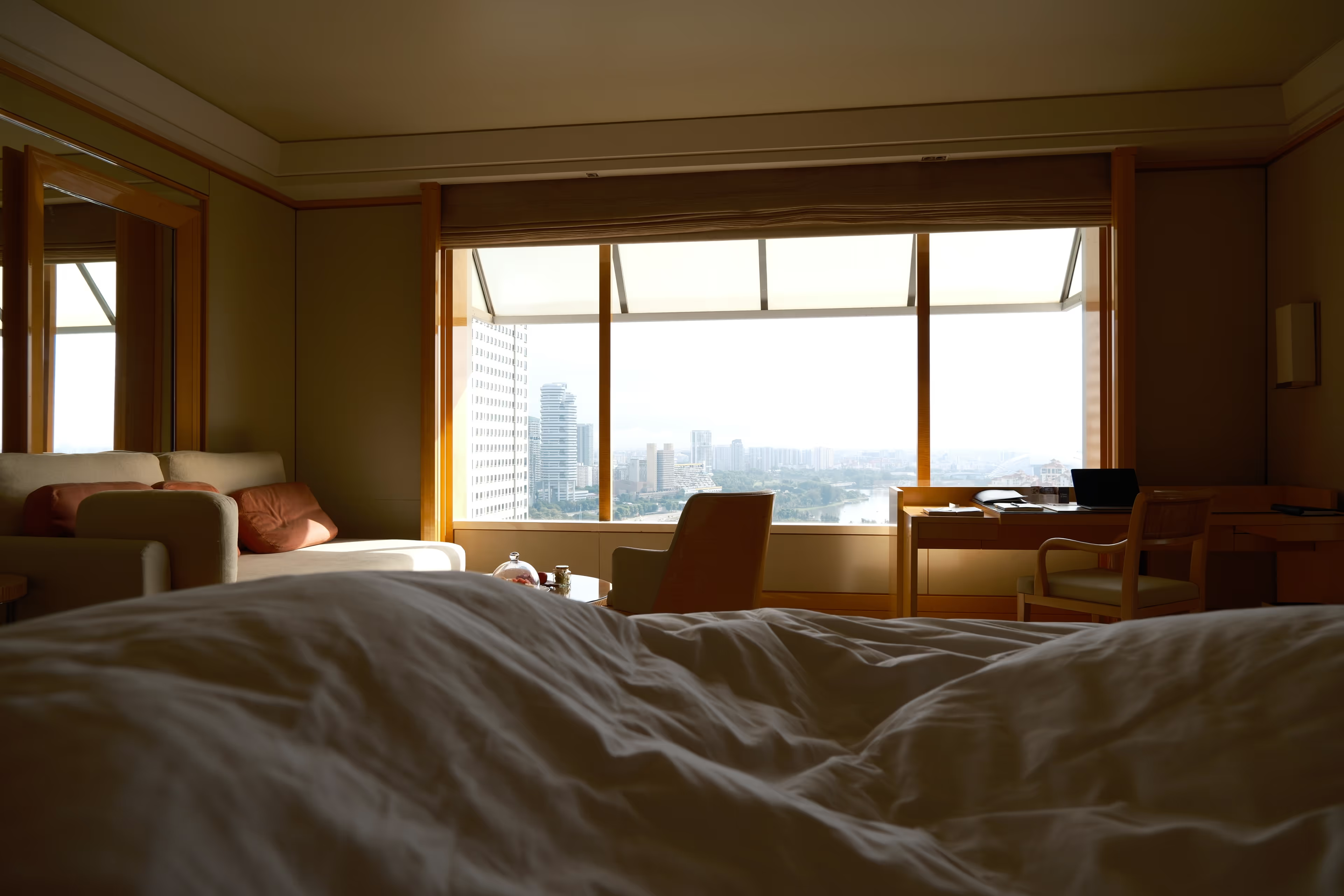
I arrived safely at the hotel and was flabbergasted. My room was a joke — it had a pond. Dozens of lotus flowers were neatly folded and displayed throughout the room. I’d never seen one before. My bathtub was a showstopper. My bed was crisp and beautiful and waiting for me patiently.
It was 1:30 pm or so (my first temple tour was at 2:30 pm), and I had legitimately nothing to wear. It was 1700 degrees outside, and so I ran over quickly to the main house.
“Is there anyone who can take me to buy some linen very quickly? I’ve realized I have nothing to wear for my tour. What are the temple rules again? And how far is it to town, I have my tour at — ”
“At 2:30, yes Bong,” the sweet hotel manager responded to my frenetic line of questioning.
“You have plenty of time, Bong,” the manager said, smiling. “Town is only a couple of minutes away. I’ll have someone go with you. Your guide will meet you back here at 2:30.”
Perfect.
I ran back to my room to grab my phone, camera, and water. I looked so much like such a tourist it hurt. A lovely woman from the hotel hopped into the tuk-tuk with me. She was beautiful and so kind. I was grateful for the company — relieved not to be navigating town for the first time on my own.
When I say I could not breathe in this heat — that’s not an exaggeration. I placed my freshly refilled water bottle on my cheeks to cool down. My face was pulsing, stinging almost. The wind from our drive only made it worse.
We arrived at a small linen shop — a handful of women were peeling mangoes on the floor. I browsed quickly and tried on a white linen set in the hallway.
“How much for this one?” I asked.
“$12,” the woman replied.
“For both pieces?” I questioned.
“Yes.”
I tried on a black set too.
“$39, Bong,” the woman offered before I even asked.
“Perfect — I’ll take them both — thank you,” I told the woman.
We hurried back to the hotel, and I rushed to my room. I dropped my bags, slipped into the new black linen set, smoothed on sunscreen, and tied my hair back into a ponytail. I grabbed my camera bag and the hat they’d gifted me at check-in.
I was late.
Waiting in the front driveway were my tuk-tuk driver, Thama, and my guide.
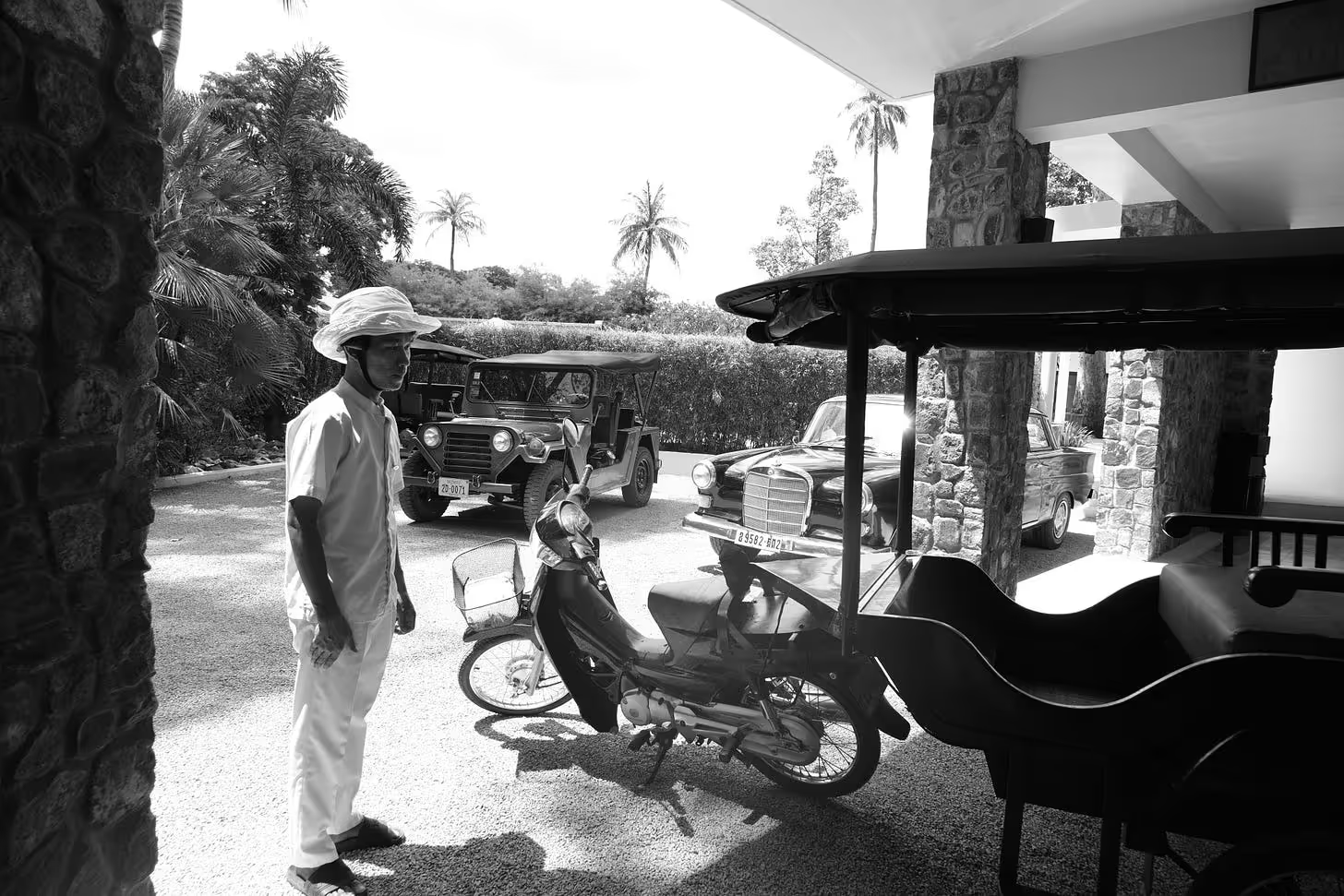
“Bong, Caroline — this is Yoko, your guide,” someone said.
Yoko stepped forward and bowed. His smile was so big, I couldn’t help but smile even bigger.
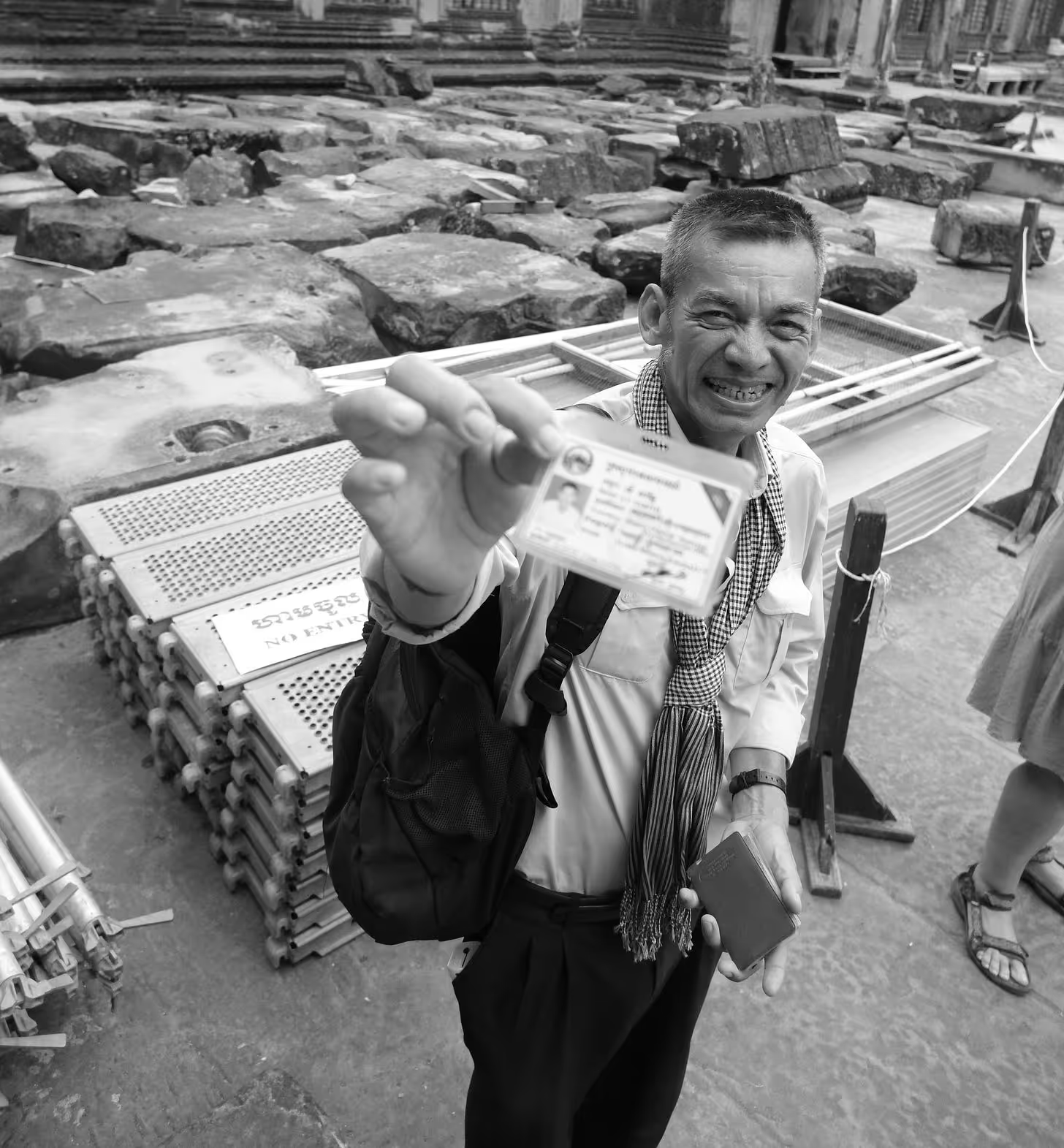
“Ready to go?” Yoko asked.
“Ready to go!” I responded.
“Alright — let’s go!”
We climbed into the tuk-tuk and Thama started pedaling. The heat was still thick and unforgiving.
“It gets better around four o’clock,” Yoko said, reading my mind. “Morning tours are best. You will see when we go in the morning — much better, you will love it,” he said.
I settled into that same stillness from my drive earlier as we made our way toward the temple gates, which would take “only twenty minutes or so,” according to Yoko.
I was in awe of everything, really.
I saw my first monk in person — “baby monk, very young. It wasn’t this way before the war,” Yoko explained.
I saw my first “water-buffalo over there, look —” Yoko pointed.
I somehow forgot about the heat because it didn’t matter — not when I was on a tuk-tuk in Siem Reap about to visit some of the most ancient temples in the world.
Our first stop was Angkor Thom.
I’d only ever seen it in movies or in pictures. It was the image that had convinced me to come here in the first place, actually.
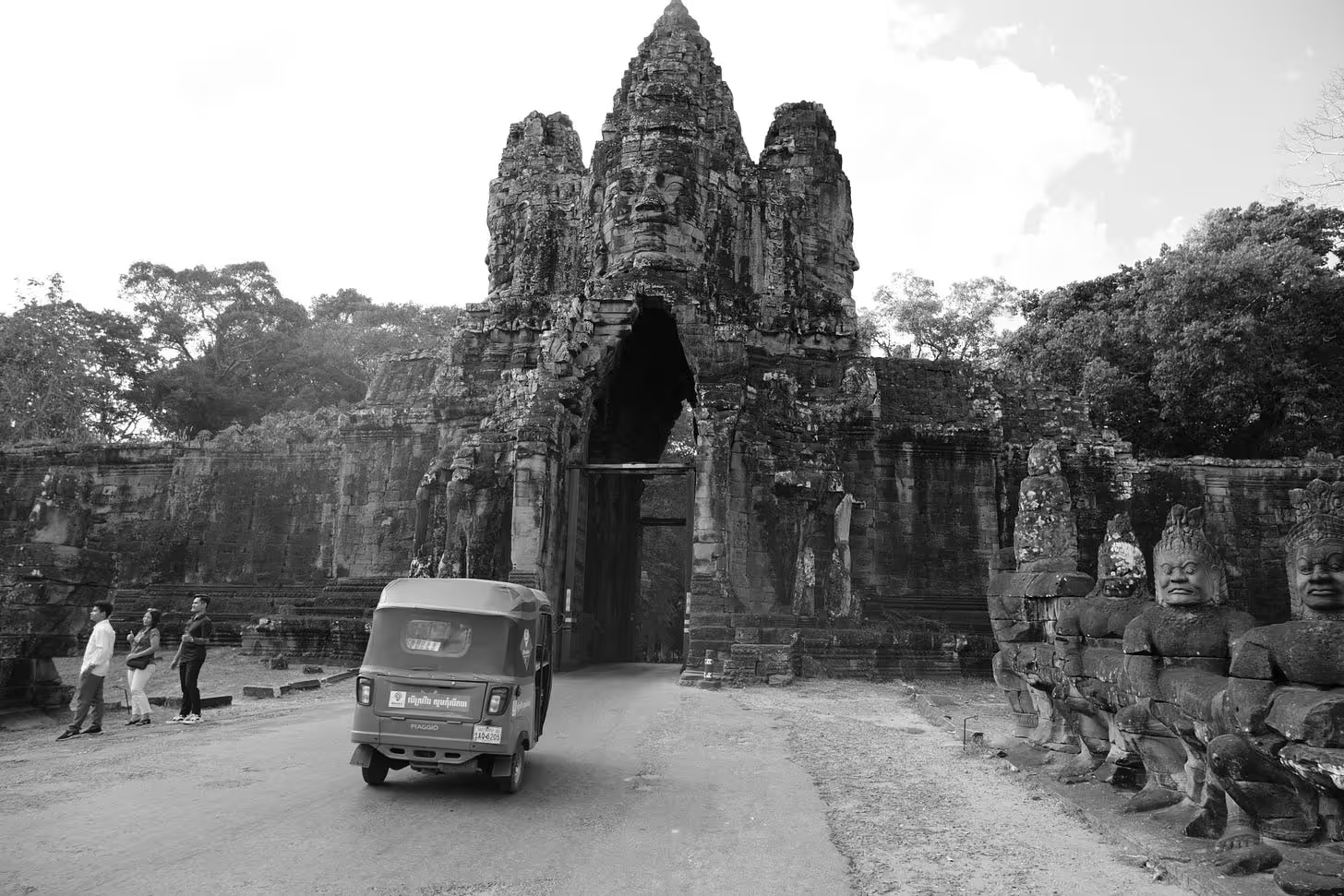
Yoko explained that the four faces carved into the temple stood for:
“Loving kindness, sympathy, compassion, and equanimity.”
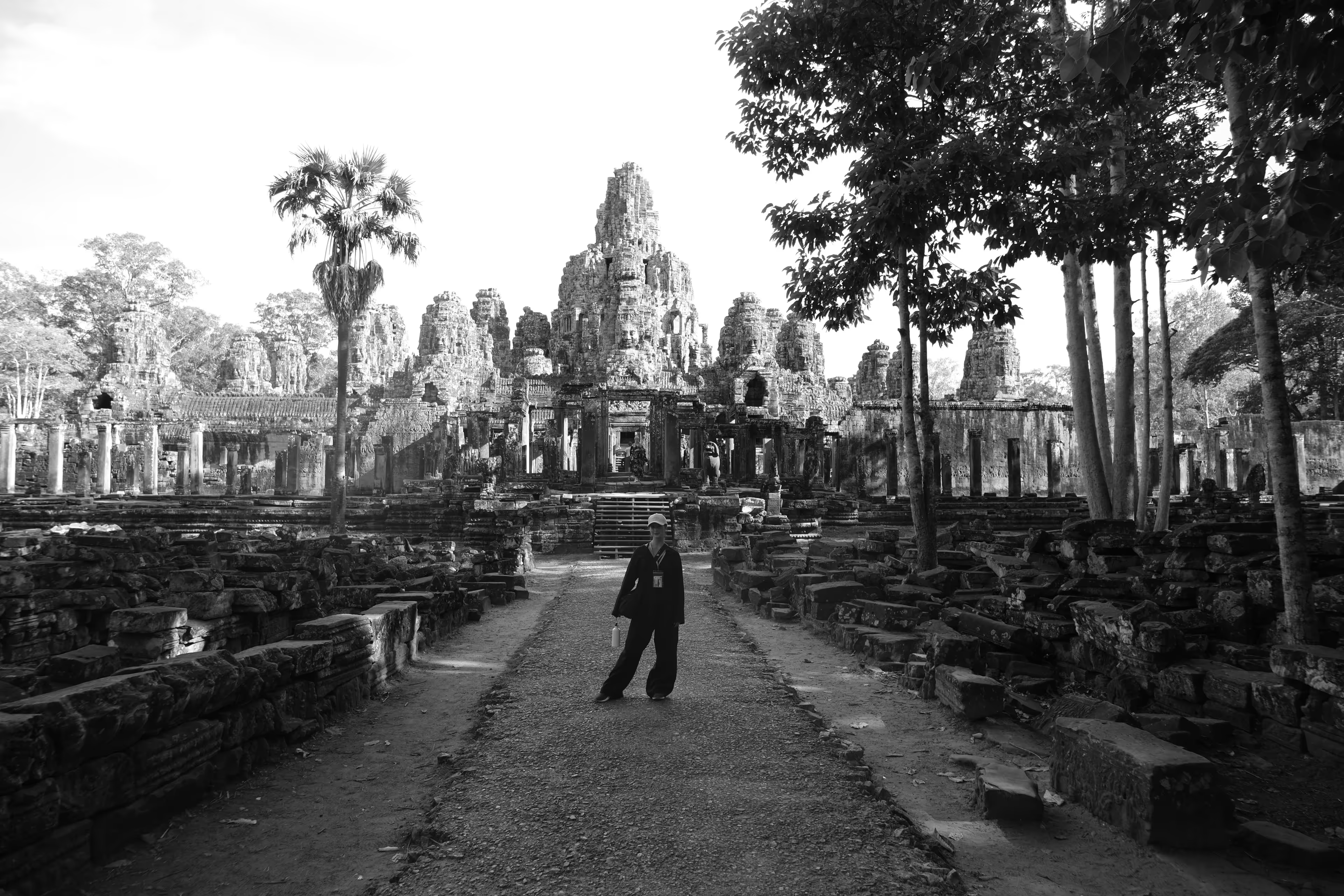
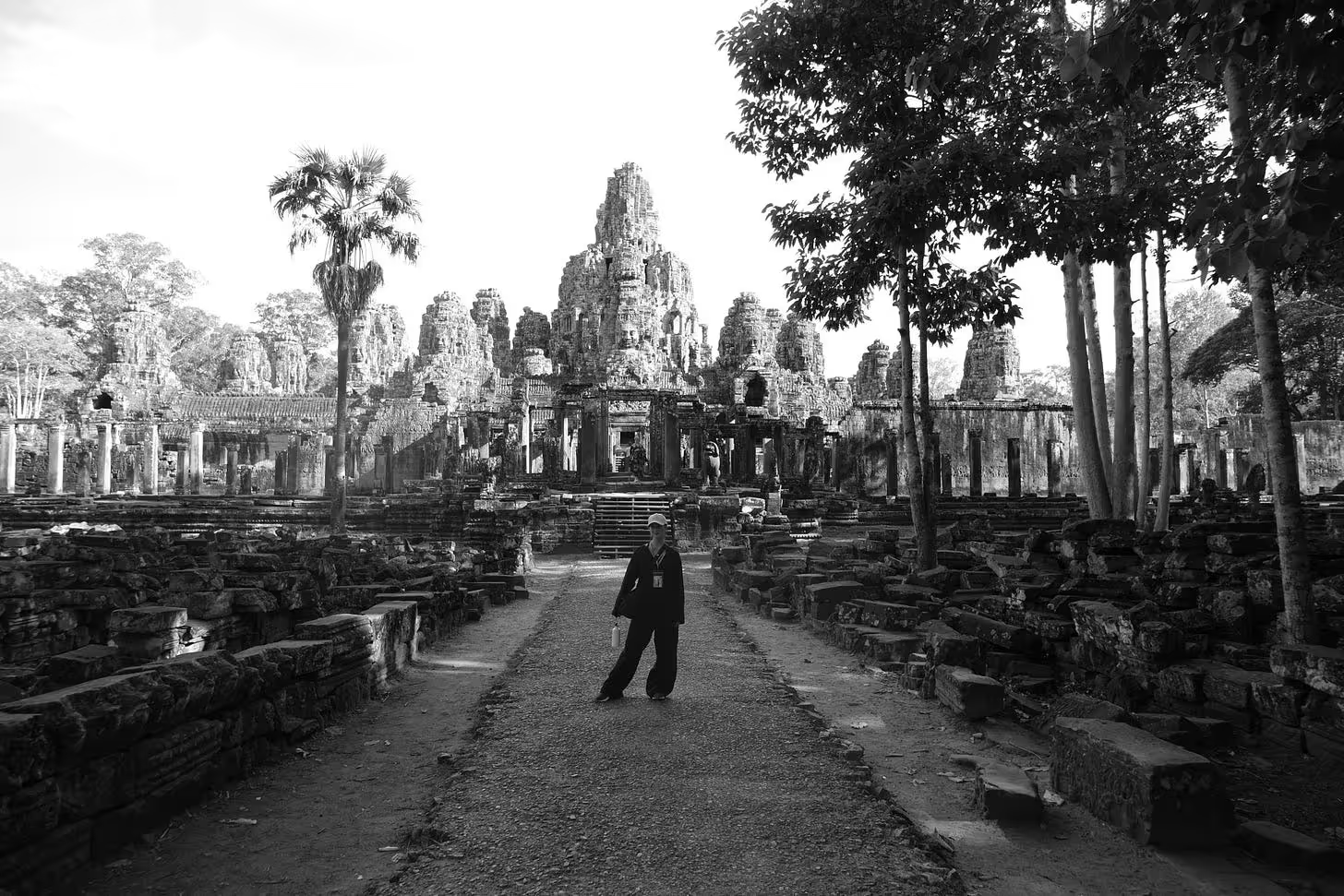
We met Thama back on the main road and drove to Bayon Temple — “like Times Square,” Yoko said with a grin. It was built in the 12th century and had “many smiling faces.”
“See the lip?” he said and pointed to one of the smiling faces.
“Like mine. We are the same. Smiling faces means Buddhist temple.”
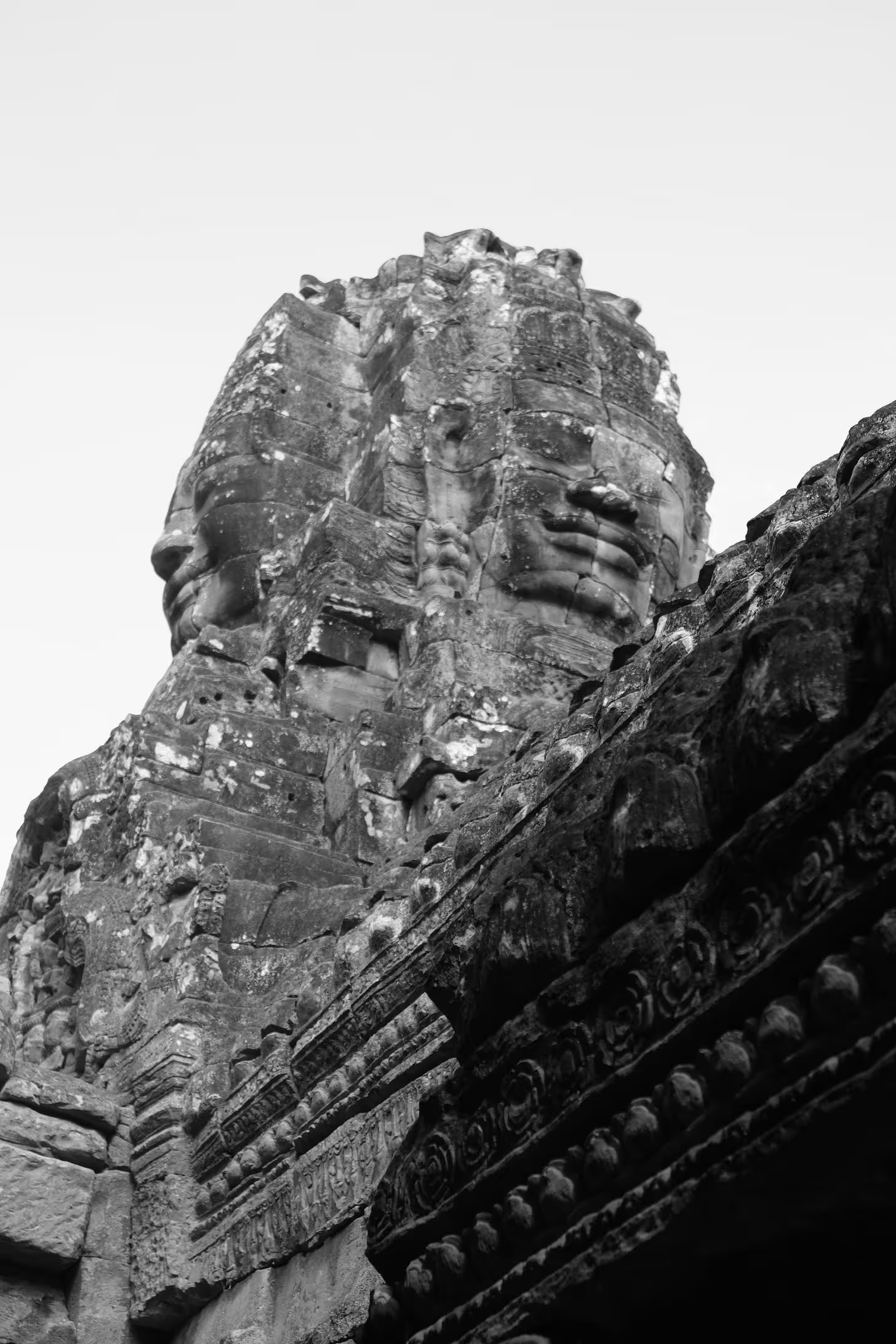
Yoko took pictures of me in front of Bayon Temple. He used to be a journalist and then became the first tour guide in Siem Reap, “when there was only one hotel — now there are 600.”
We crossed to a Hindu temple next — Baphuon, built in the 11th century. No smiling faces this time, but we did see monkeys! Yoko pulled out a slingshot… hilarious.
“A guest got bitten once and got rabies. Now I carry this.”
We made our way to Baphuon, and Yoko said something along the lines of, “most people don’t want to climb, but I know you will want to climb.”
Oh no, Yoko. Climb? What gave you that impression — lmao. I am so hot. And hungry. I thought to myself.
I was drenched in sweat but it didn’t matter. I followed Yoko.
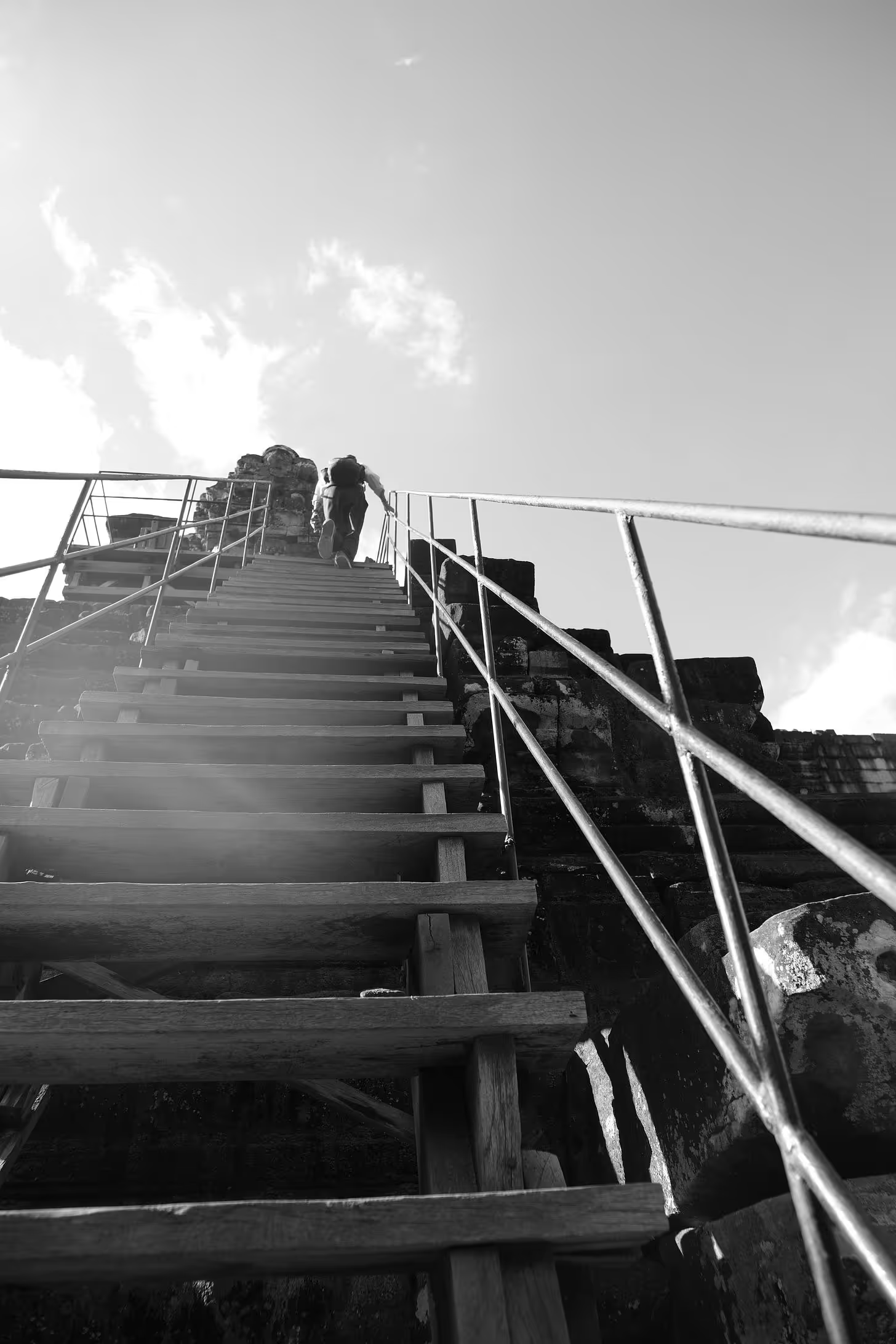
We climbed the temple, and Yoko beat me easily. The sun bore down on us. When we finally reached the top, I grabbed for my water and found the nearest step to sit on.
There were so many butterflies.
“God can take any form he likes,” Yoko said and pointed to the butterflies.
We sat up there for a while together. When we made it back down, Yoko turned to me and asked —
“Are you tired? We can see one more secret temple or go back — up to you,” he said.
“Secret temple, please,” I responded.
We walked through a construction zone and into the jungle.
Yoko pointed out where landmines once lay buried and shared how, years ago, he used to guide people through these same paths. The temples were the same, but the journey there looked very different.
The path dipped down.
“You go first,” he said, signaling for me to walk ahead of him.
I stepped through the clearing and stopped cold.
“Yoko!” I exclaimed.
There, hidden in the jungle, was the most beautiful temple I’d ever seen. It was untouched and alive. Swallowed by time.
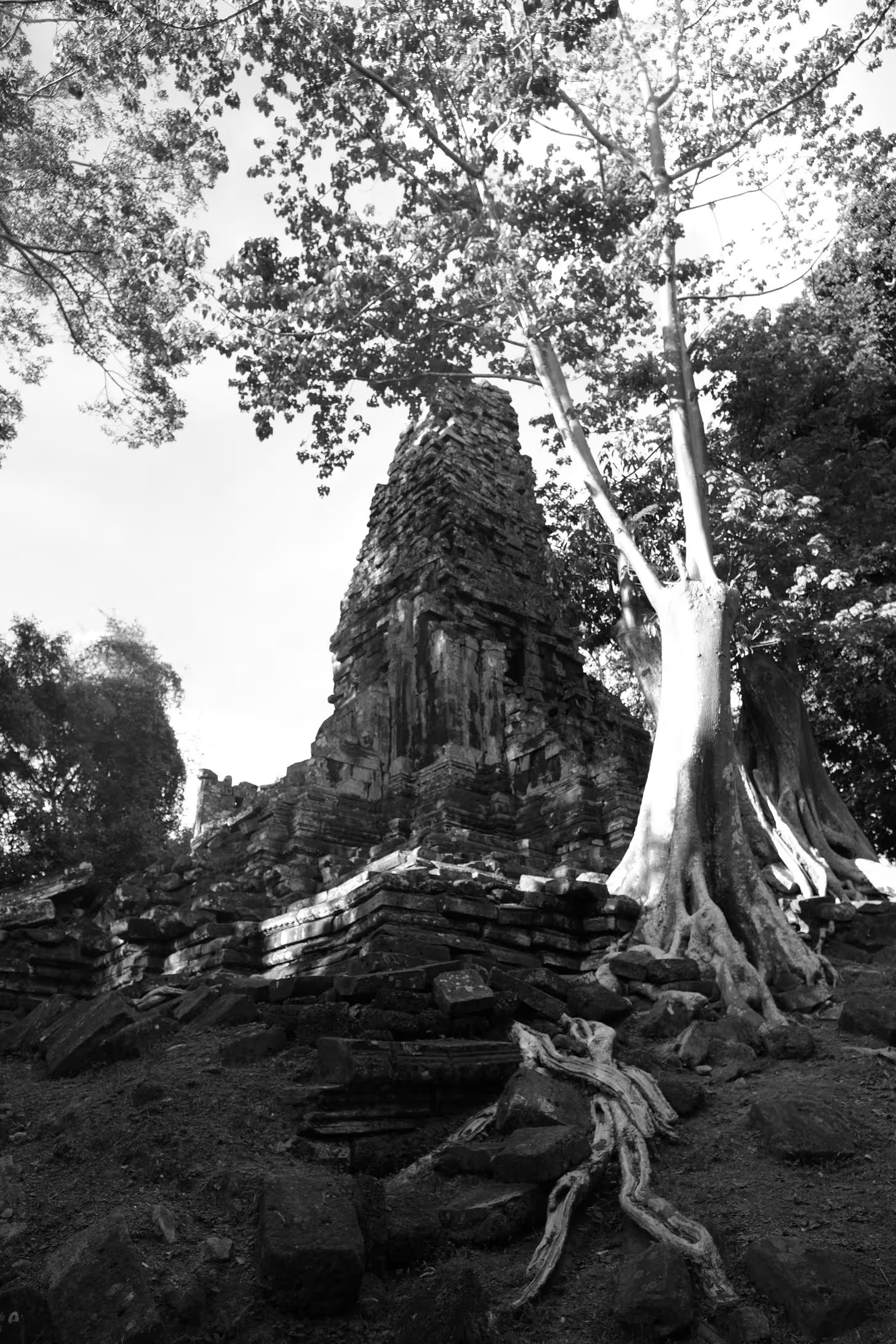
“Wow,” was all I could say.
Yoko was talking — but I couldn’t hear a single word he was saying. I was in awe.
Yoko kept walking, and I stopped.
“Yoko, do you mind if I stop and pray?” I asked.
“Of course, of course,” he said. “Please enjoy. Take your time. The temple is yours.”
When he said those words — the temple is yours — I dissolved into tears.
The temple was mine.
I peeled the heavy camera bag from across my body, the strap still etched into my skin from the heat and the weight of all my belongings — banana bread and chapstick included.
I sat down gently on the nearest rock and was overcome. I was so humbled. I knew I was experiencing something divine.
None of it made sense and then suddenly it all did.
There is no way for this to not sound cheesy — but it was a moment that confirmed my existence.
Wait — I just went back to my journal and this is what I wrote:
“It made sense for me to be here only because it didn’t make any sense at all. It didn’t make any sense that I was sitting alone in this temple on a Friday listening to the birds.
I used to say all the time (and very flippantly, might I add) — “well, none of this matters anyways.” “This” being life. None of “this” matters because we are just going to leave — and it makes no sense why we are here in the first place. Quintessential existentialism.
Sitting in this temple was like a direct line to God — where I went, “oh — of course it makes sense. All of this matters so much. I matter so much.”
Look at what came before me. Look at what has endured (the temple and me)...
I felt this profound sense of peace because look (!!!!!) — through wars and through so much pain and bloodshed and uncertainty — this temple was here for me to enjoy today. I thought of all of the people who came to this very rock, and prayed the same prayer as me.”
My prayer went a little something like this …
I thanked God for holding my hand and for showing me the way.
I thanked him for my incredible life — and for the miracle of getting to live it as myself.
I prayed for him to open the doors He wants me to walk through so that I can help others and myself.
I prayed for him to introduce me to the people he wants me to love and be loved by.
I prayed for protection for myself and for my family.
I prayed for peace — and for my mind to be freed from worry.
I prayed for my future husband and for our beautiful angels, who I knew were watching over me in that moment. I remember speaking to them — telling them I loved them, that I couldn’t wait to meet them, and that I hoped they were proud of me. I knew they loved Yoko’s picture of me at Bayon Temple.
I prayed for my sister’s future husband and for her beautiful angels.
There are very few times in life when you can definitively say— this is the most profound moment of my life. But this was. Undeniably. And I knew that while it was happening, which was also pretty unbelievable.
This was a portal. A thread tied between lifetimes.
And on a Friday in Cambodia, the temple was mine.